Why Villa Businesses in Bali Need Multi-Dimensional Accounting
Tika Pro
- 4 minutes read - 709 wordsA common way to track finances in villa management is pretty straightforward. Income in, expenses out. You get a profit or loss number at the end of the month.
But that number doesn’t tell you much. Which villa made money? Which one lost money? Did Airbnb bookings actually earn more than direct ones after commissions? You can’t tell from a flat list.
That’s where multi-dimensional accounting helps.
What Does “Multi-Dimensional” Mean?
It just means you add tags to every transaction.
Instead of recording “Rp 15,000,000, Revenue,” you also note which villa it’s from, which booking channel, and what type of income it is.
For example, a guest payment could be tagged like this:
- Villa: Villa Melati
- Channel: Airbnb
- Type: Room Revenue
An electricity bill could be tagged:
- Villa: Villa Kamboja
You’re not changing how you do your bookkeeping. You’re just labeling things so you can sort and filter them later.
Why This Matters for Villa Businesses in Bali
You manage more than one villa. Most villa managers handle several properties, often for different owners. Each owner wants to know how their villa is doing. Without tags, you can’t easily separate one villa’s numbers from another.
OTA commissions are different per platform. Airbnb, Booking.com, and direct bookings all have different costs. If you can’t see revenue and costs per channel, you don’t know which one gives you the best margin.
Owners ask questions. “How much did we spend on maintenance?” “Why were costs higher this month?” If your data is tagged, you can answer in minutes. If not, you’re digging through spreadsheets.
It Also Helps With USALI and PSAK
If you’re familiar with hotel accounting, you’ve probably heard of USALI (Uniform System of Accounts for the Lodging Industry). It’s the standard way hotels organize their financials by department: rooms, F&B, spa, and so on. Multi-dimensional tagging follows the same idea. Tag transactions by department, and your reports already line up with how USALI expects things to be categorized.
On the local side, PSAK (Indonesian accounting standards) requires financial statements in a certain format, including proper revenue recognition and expense classification. When your transactions are consistently tagged, pulling data into PSAK-compliant reports is straightforward. You’re not reclassifying things at the end of the year. The structure is already there.
What Reports Can You Get?
Once your transactions are tagged, you can pull reports like:
- Profit and loss per villa
- Revenue per booking channel
- Cost comparison across properties (maintenance, utilities, staff)
- Owner statements showing only their villa’s numbers
These aren’t special reports. They’re just your normal data, filtered by the tags you already added.
How to Start
Keep it simple. Start with three tags:
- Villa - which property is this for?
- Category - what kind of income or expense?
- Channel - where did the booking come from, or who did you pay?
Once your team is used to tagging these three, you can add more later, like department.
The important thing is to be consistent. If only half your transactions are tagged, your reports won’t be reliable.
Tagging in P&L Reports
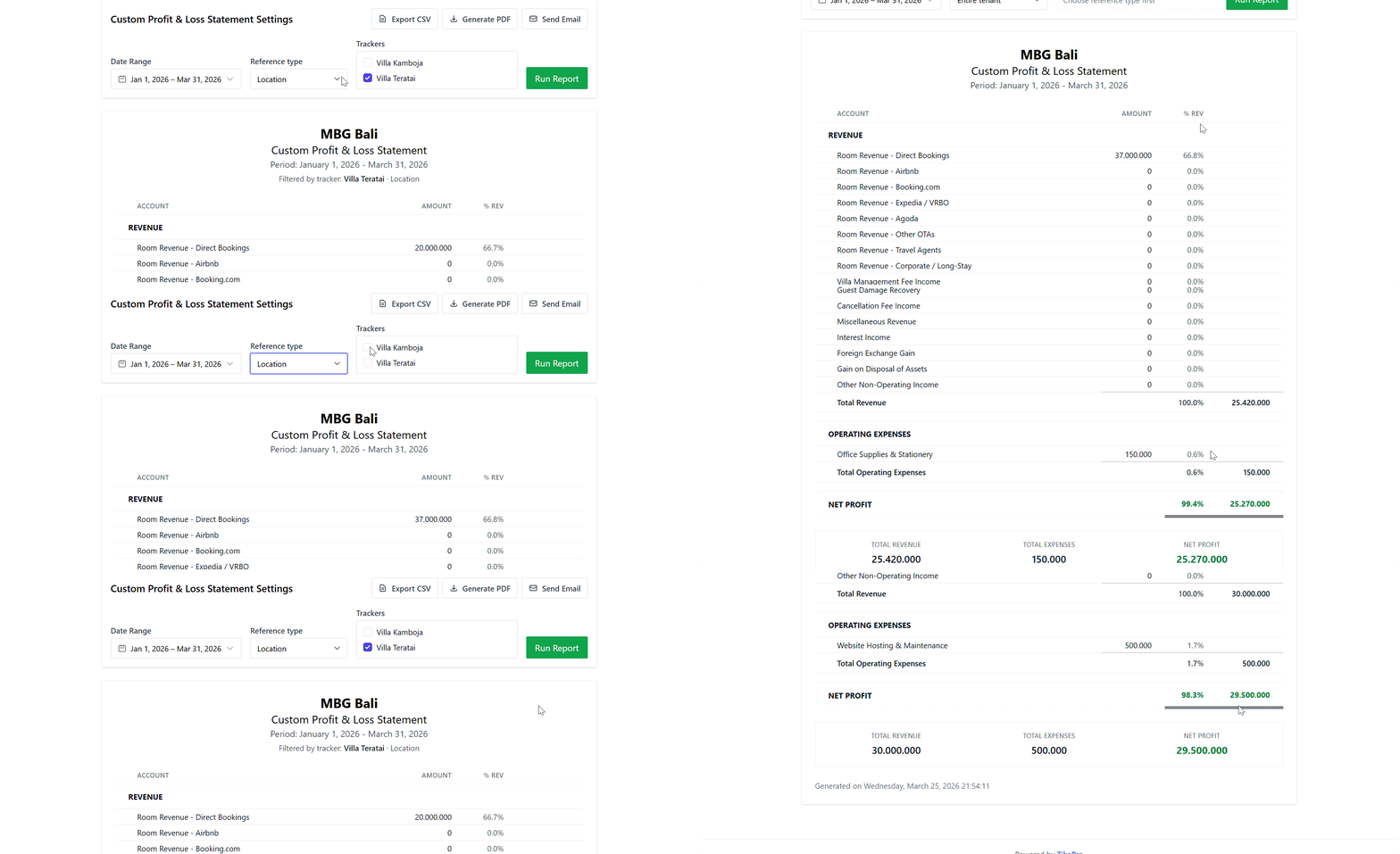
A standard profit and loss stays useful for the big picture. Where tagging pays off is when you slice the same P&L by villa, channel, or category so you can compare performance without rebuilding the report in Excel every time.
Use Software That Supports This
If your accounting software doesn’t support tagging or tracking categories, you’ll end up doing this in spreadsheets. That’s extra work and easy to mess up.
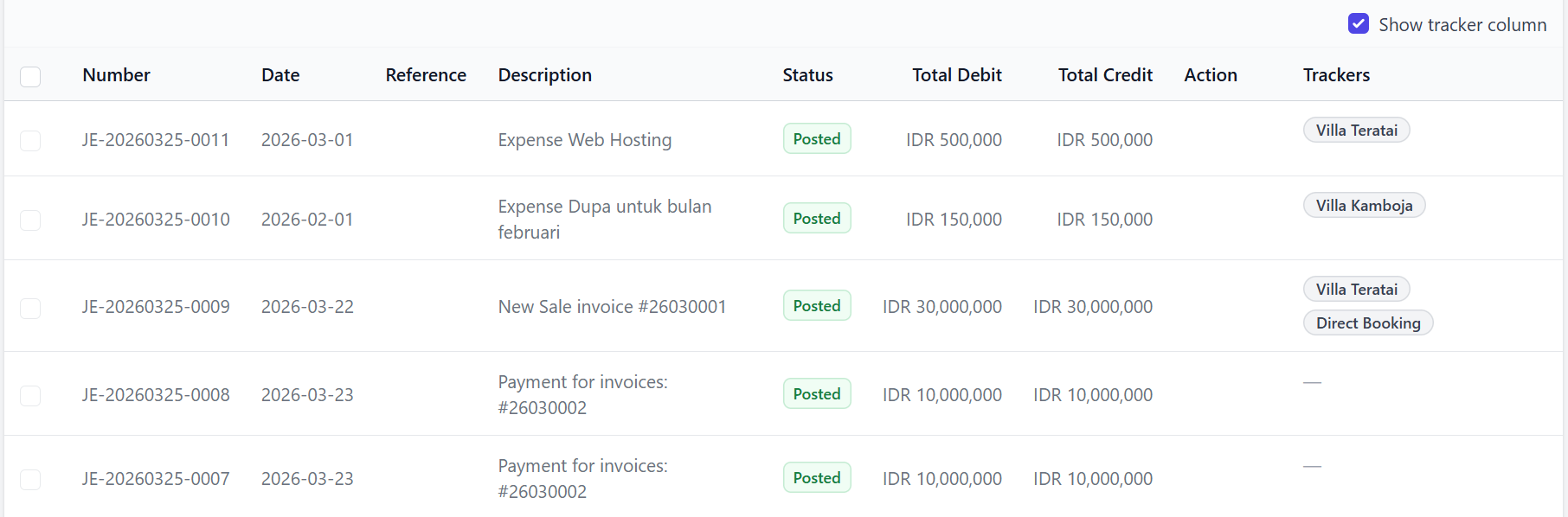
Our platform is built with multi-dimensional tagging as a core feature. You define your own tag dimensions and can apply tags manually when you post or review transactions, or let the system apply them automatically from rules, defaults, and flows you configure — so routine lines stay consistent without retyping the same tags every time. Then you pull reports filtered by any combination. It works whether you manage two villas or twenty.
Villa management in Bali is already complicated. Your accounting doesn’t have to be.